
India’s data science and artificial intelligence landscape is steadily expanding, shaped by the increasing role of data in academic, institutional, and industry contexts. As analytical tools and intelligent systems become integral to decision-making, there is a growing need for graduates who can engage with data critically, apply technical knowledge responsibly, and interpret insights within broader social and disciplinary contexts.
St Aloysius (Deemed to be University) is advancing its academic engagement with data science and artificial intelligence through an approach that emphasizes intellectual rigor, ethical grounding, and interdisciplinary learning. The university’s accreditation by the Data Science Council of America (DASCA) reflects a commitment to aligning its academic programs with globally recognized standards, while fostering the analytical, reflective, and application-oriented capabilities required in a data-driven world.
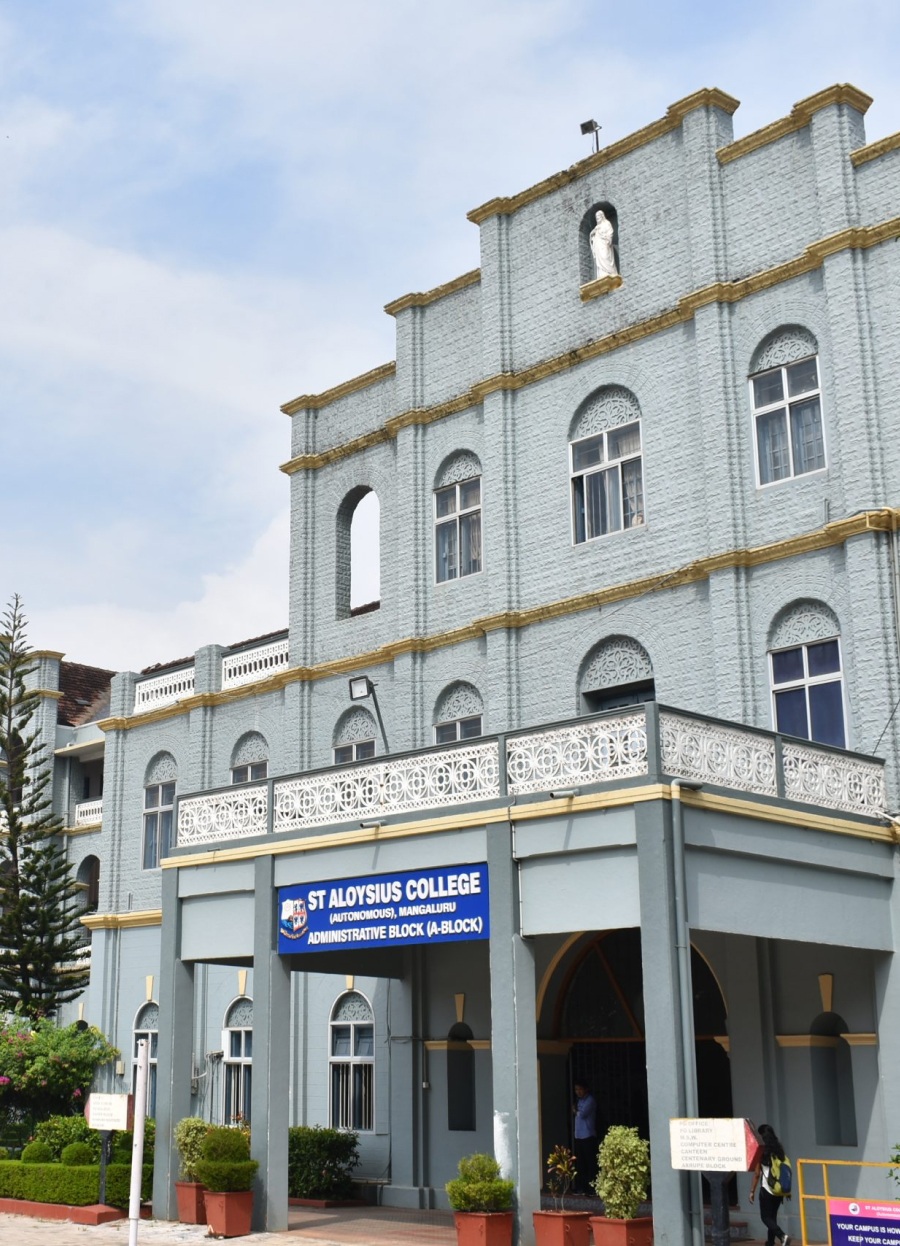
Established in 1880, St Aloysius (Deemed to be University) carries forward a distinguished legacy of over a century in higher education. Rooted in a tradition of academic excellence and value-based learning, the institution has consistently evolved to meet the changing demands of education while remaining anchored in its foundational principles of intellectual inquiry, ethical development, and social responsibility.
Located in Mangaluru, the institution today offers a wide spectrum of undergraduate, postgraduate, and doctoral programs across disciplines including arts, science, commerce, management, and emerging technology domains. It is supported by a vibrant academic community of over 8,000 students and more than 300 faculty members, fostering a dynamic environment for learning, research, and interdisciplinary engagement. Building on its century-long legacy, St Aloysius continues to emphasize close faculty student interaction, holistic development, and the integration of knowledge with societal relevance, preparing graduates to contribute meaningfully to an increasingly complex and evolving world.
India is entering a decisive decade where data is no longer a support function but a central driver of economic and technological transformation. Enterprises across sectors from fintech and e-commerce to public health systems and smart manufacturing are embedding artificial intelligence and advanced analytics into their core operations. This structural shift is redefining the nature of work and creating an urgent demand for professionals who can translate data into actionable intelligence.
India is projected to account for nearly one-fifth of the world’s analytics talent pool by 2027, reinforcing its position as a strategic hub for data-driven innovation. The country’s expanding digital infrastructure and thriving startup ecosystem continue to accelerate the adoption of AI at scale.
Recent industry assessments indicate that data and AI-related roles are among the fastest-growing job categories in India, with demand expected to grow at a compound annual rate exceeding 25% over the next few years. Additionally, the rise of Global Capability Centers (GCCs) in India has significantly increased demand for advanced analytics and data engineering expertise.
With global AI investments projected to approach USD 350 billion annually by the end of the decade, the emphasis is shifting toward high-quality, application-oriented data science education. Institutions are now expected not only to impart theoretical knowledge but also to cultivate real-world problem-solving capabilities aligned with industry needs.
Within this evolving academic and technological landscape, St Aloysius (Deemed to be University) is advancing a forward-looking academic vision anchored in emerging disciplines such as artificial intelligence, machine learning, and data science. Through a curriculum that blends conceptual depth with experiential learning, the Institution is fostering a new generation of professionals equipped with analytical rigor, technological fluency, and industry-relevant competencies. This integrated approach ensures that students are not only prepared to participate in the data economy but are also capable of shaping its future trajectory.
The academic offerings at St Aloysius (Deemed to be University) have undergone a rigorous, multi-layered assessment by the Data Science Council of America, a globally recognized standards-setting body in data science education and certification. This accreditation awarded on May 26, 2026 and valid through May 25, 2032 signifies that the institution’s programs are aligned with globally benchmarked, vendor-neutral frameworks that emphasize technical depth, analytical proficiency, and industry readiness.
Through its engagement with the Data Science Council of America, St Aloysius (Deemed to be University) has further refined the alignment of its academic programs with globally recognized industry standards. This accreditation framework enables the institution to embed structured, competency-driven learning pathways that strengthen both academic outcomes and professional preparedness.
For St Aloysius, this distinction underscores a sustained commitment to academic excellence in data science and allied domains, while reinforcing its standing as an institution that equips learners with the capabilities required to navigate and excel in an increasingly data-centric global workforce.

“DASCA accreditation is a significant recognition of St Aloysius’ more than century-old legacy of academic excellence and its continuing commitment to future-ready, globally relevant education. As data science and artificial intelligence reshape knowledge, industry, and society, DASCA’s international benchmarks strengthen our resolve to advance academic quality while creating stronger professional pathways for our students. For an institution built over generations on a proud tradition of values, scholarship, and service, this milestone reflects both the dedication of our faculty and our responsibility to prepare graduates who are competent, ethical, and ready to contribute meaningfully to the world.”
DASCA accreditation represents a comprehensive and multi-dimensional evaluation of academic quality, assessing the robustness, relevance, and future-readiness of programs against globally established standards in data science. This process examines key academic dimensions including curriculum design, pedagogical rigor, faculty expertise, and the extent to which programs are aligned with ongoing advancements in analytics, artificial intelligence, and data-driven technologies.
For St Aloysius (Deemed to be University), this accreditation reflects a purposeful advancement toward academic excellence and deeper global integration within the data science domain. It highlights the institution’s emphasis on interdisciplinary learning, research-led instruction, and the cultivation of graduates equipped with strong analytical capabilities and technical depth. In doing so, the institution is strategically positioned to contribute to and shape the rapidly evolving knowledge economy driven by data science and intelligent systems.